
High Level Workshop on ERA 2018


High Level Workshop on ERA 2018
Mission-oriented Research
Member-only information is available on this page. Please log in to access it.
The High Level Workshop on ERA offers an annual platform for Science Europe Member Organisations, national ministries, and EU institutions to discuss progress, specific aspects, and future development of the ERA.
The High Level Workshop on ERA 2018 was co-organised by Science Europe and:
- Spanish National Research Council (CSIC)
- Spanish State Secretariat for Research, Development, and Innovation
About the event
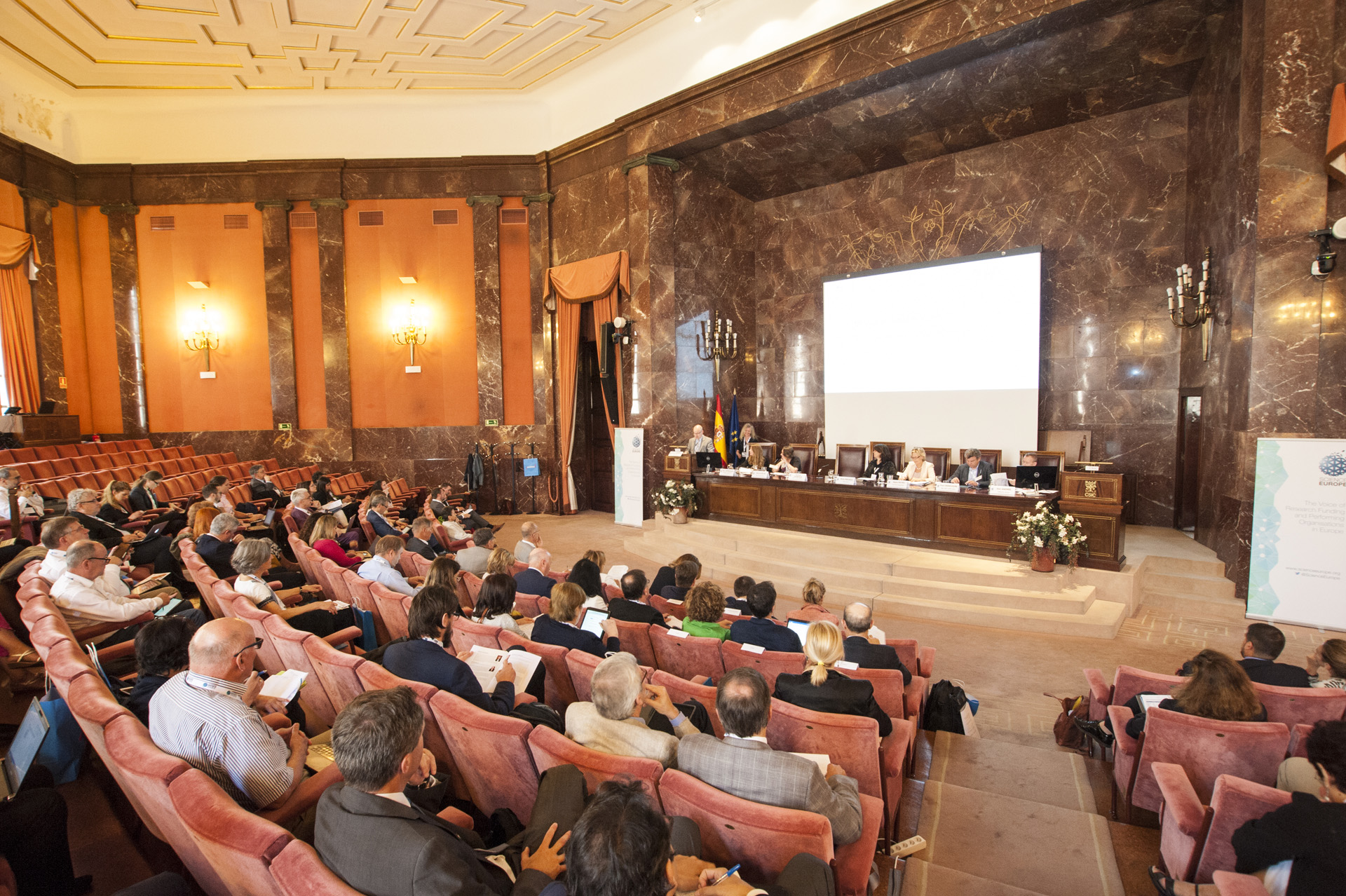
Mission-oriented research can be a useful addition to the funding portfolio of national and EU research programmes, but it needs careful design to complement curiosity-driven research. During the High Level Workshop, Heads of the Science Europe Member Organisations, researchers, representatives of national ministries and of the European Commission (EC) debated the rationale and implementation issues of mission-oriented research programmes.
Summary
Missions in the Framework Programme
One week ahead of the official release of the proposal for Horizon Europe, the next EU Framework Programme for Research and Innovation (2021–2027), Signe Ratso, Deputy Director-General for Research and Innovation at the European Commission, confirmed that the programme would include a mission-oriented approach. The missions themselves had not yet been defined and would not form part of the proposal.
Missions in Horizon Europe were intended to have a dynamic budget allocation, meaning that funding levels are expected to be determined through individual calls rather than fixed for an entire mission. They are expected to be overseen by Mission Boards that bring together relevant stakeholders.
Given the potentially large budgets involved and their possible effects on research systems, particular attention will need to be paid to the selection and evaluation mechanisms for missions in Horizon Europe.
Discussions at the High Level Workshop
The High Level Workshop was presented as the start of a broader discussion on achieving a balanced and productive combination of excellence and impact in science and innovation under Horizon Europe.
Several Science Europe Member Organisations already had direct experience with similar approaches and could provide evidence-based guidance on programme design. Key issues highlighted during the workshop included framing calls in ways that allow bottom-up responses to defined missions. Examples from the UK, Finland, the Netherlands, France, and Sweden illustrated these considerations.
One contribution emphasised that mission-oriented approaches should not dominate the overall funding portfolio. Using the analogy of a pyramid, it was argued that a strong foundation of research and research infrastructures must be maintained to support both current and future missions.
The careful definition of the scientific contribution to each mission was also identified as essential to avoid creating unrealistic expectations. Participants stressed that science alone cannot guarantee the success of a mission-oriented approach and that support beyond the research sector will be needed to translate research outcomes into effective action.
Another perspective highlighted the importance of defining missions that address the root causes of societal challenges rather than only their symptoms. The significance of human behaviour as a factor in addressing these challenges was also underlined.
Outcome
In the coming months, Science Europe will develop concrete recommendations and a catalogue of issues requiring particular attention. These will support its ongoing collaboration with the European Commission in shaping the mechanisms for mission-oriented research within Horizon Europe.