High Level Workshop on ERA 2013

High Level Workshop on ERA 2013
Realising the European Research Area
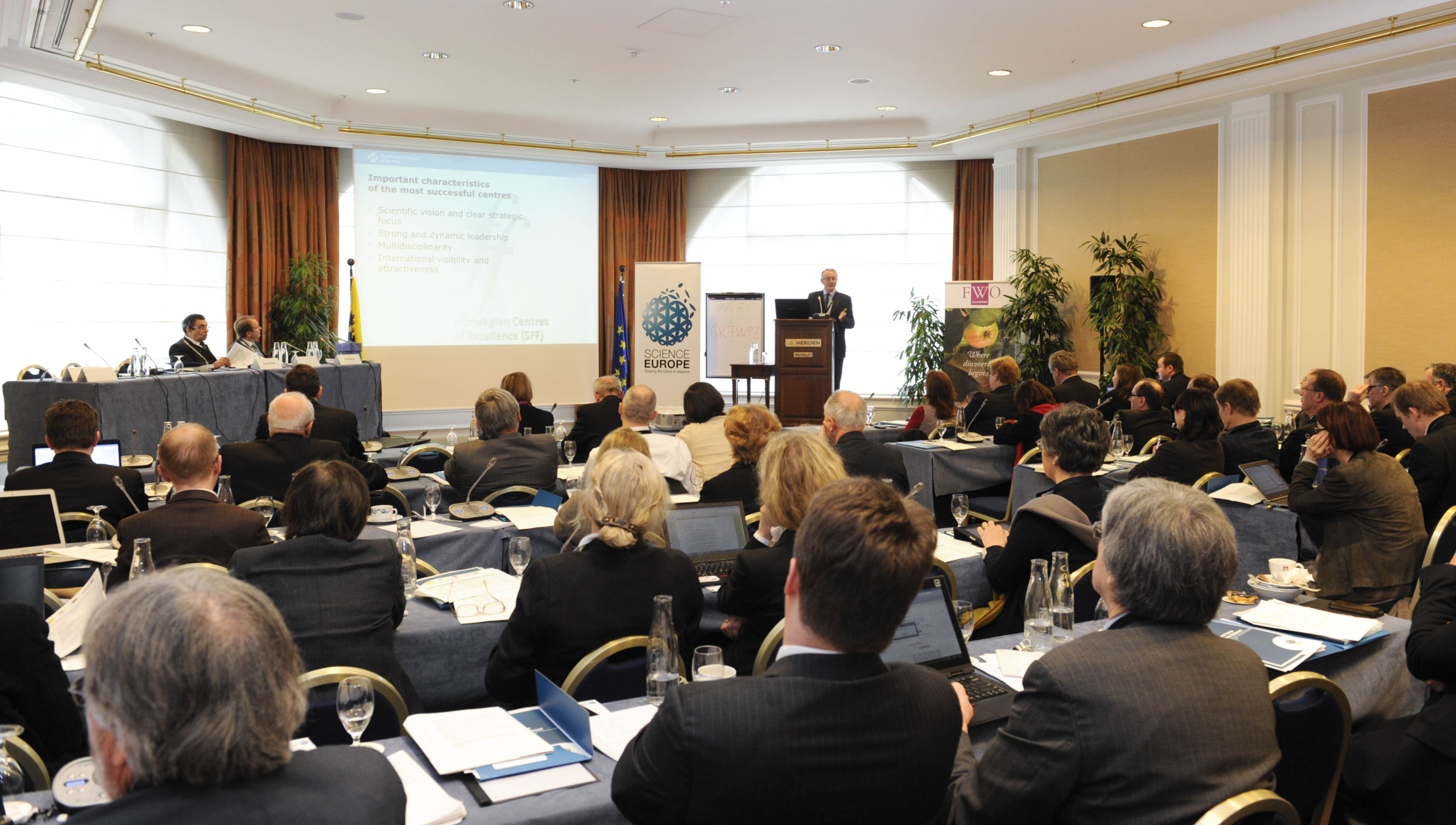
The High Level Workshop on ERA offers an annual platform for Science Europe Member Organisations, national ministries, and EU institutions to discuss progress, specific aspects, and future development of the ERA.
The High Level Workshop on ERA 2013 was co-organised in Brussels by Science Europe and:
- Flemish Ministry for Innovation, Public Investment, Media and Poverty Reduction
- Research Foundation Flanders (FWO)
About the event
he 5th High Level Workshop on ERA discussed the progress made on establishing the ERA in the past year and focused specifically on:
- excellence in the ERA
- Open Access to scientific publications
- cross-border collaboration
Summary
The workshop saw interesting presentations and lively discussion. The advocacy role of bodies such as Science Europe to help to ensure the 26% increase for research in the recent EU budget negotiations was emphasised, alongside the value of the stakeholder partnership on ERA. The European Commission expected stakeholders to deliver against the ‘big ticket’ issues within their remits. Legislation should be viewed as a ‘carrot’ to help to reduce identified bottlenecks, rather than a ‘stick’.
On excellence, there was considerable emphasis on the importance of cohesion to science and innovation, and there was consensus that research excellence and capacity building are not in opposition, even if they are sometimes portrayed as such. In addition to cohesion there are many issues to grapple with if we are going to create a truly excellent ERA. Many of these (e.g. open access, cross-border collaboration, gender, and research integrity) are very much in Science Europe’s remit and interest.
At the workshop there were good examples of best practice, such as the linking of research and cohesion funding in Estonia, or the use of ‘soft’ measures to improve gender balance in Norway. The importance of international co-operation was stressed, as was engagement with industry. Similarly, the importance of the research environment and fostering a positive institutional climate was stressed. It is also important not to forget basic science, with the current focus on innovation, and to maintain a long-term perspective; in summary, excellence is essential for ERA.
In the Open Access session, the focus was on publications, but the importance of data was fully recognised (and it was mentioned that Science Europe has a new Working Group on this topic). The meeting heard from the European Commission that they will support both ‘gold’ and ‘green’ open access under Horizon 2020, although there is debate at present about how ‘gold’ can be reimbursed.
There was discussion more generally around the issue of transition costs in the move to ‘gold’ open access, which is the ultimate goal, and it was stressed that a transition period could see some increased cost, but that cost should be neutral, and even lower, in the longer term.
Other topics discussed included the importance of defining embargo periods and engagement with publishers. At the end of the session, the President presented the draft Science Europe principles on Open Access and stressed the ambition to move from a subscription to a different model.
Photo gallery